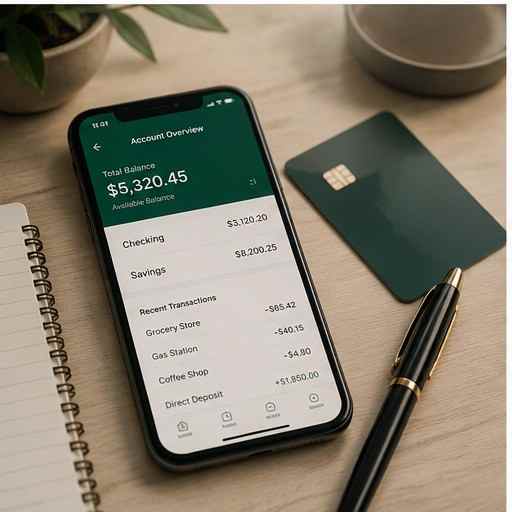
The side-by-side framework
| Feature | Chase | Bank of America |
|---|---|---|
| Best fit | Customers who value Chase access and ecosystem | Customers who value Bank of America access and relationship features |
| Monthly fee | Verify current account fee and waiver rules | Verify current account fee and waiver rules |
| Branch / ATM access | Large national network; verify local access | Large national network; verify local access |
| Overdraft policy | Check current account disclosure | Check current account disclosure |
| Savings yield | Compare separately; checking is primarily transactional | Compare separately; checking is primarily transactional |
How to break a tie
Map your real locations
Check the branches and ATMs near home, work and the places you travel. National scale matters only when it translates into convenient access for you.
Compare waiver rules using your normal behavior
Do not change your entire cash-flow pattern merely to avoid a modest fee unless the broader account benefits justify it.
Keep savings comparisons separate
The best checking account and the best savings account do not have to come from the same institution.
Chase or Bank of America: compare your normal month
Choose the exact account at each bank, then use the same assumptions in both columns: expected direct deposits, lowest balance, ATM withdrawals, cash deposits and any wire transfers. An account-level comparison is more useful than choosing a brand from its national branch count.
Write down the monthly fee and each waiver route from the current disclosure. Check whether a route requires a qualifying deposit, a daily balance, a combined relationship balance or another condition. An opening bonus is temporary; recurring requirements determine whether the account works after the promotion ends.
When access decides the comparison
Check the nearest branch hours and whether the ATMs you would use accept deposits. Compare the fee for an out-of-network withdrawal and any charge from the ATM operator separately. If neither bank has convenient access for you, include a local bank or credit union in the comparison.
When to keep savings at another bank
Convenient checking does not require keeping every savings dollar at the same institution. Compare savings APY, transfer time and fees independently. Test transfers before you rely on them for bills, and keep enough accessible cash for payments that arrive before an external transfer clears.
Live comparison requirement
Before publication, both columns should be populated from each bank's primary account disclosure on the same verification date so users are not comparing stale or mismatched terms.